
A skilled and collaborative team is the cornerstone of every well-run clinic. Creating a workplace where expertise, professionalism, and mutual support thrive is essential to smooth daily operations, delivering high-quality care to patients.
Whether you’re looking to recruit the right individuals for key roles, cultivate a positive and inclusive team culture, or navigate the complexities of managing a diverse group of professionals, structured support and guidance can make all the difference. This section includes important information on regulations and best practices of recruiting and managing staff.
Recruitment and Onboarding Best Practices
Recruitment and onboarding are not simply administrative processes; they are strategic steps in shaping a collaborative, patient-centered team. A thoughtful, structured approach helps clinics attract qualified staff, ensure alignment with organizational values, and set new hires up for long-term success.

In preparation for hiring the clinic’s first employee(s), owners likely need to further develop components of strategic and business plans including those shown here. Although not all elements may need to be in place immediately, it is important to develop a comprehensive complement of policies in the first quarter of operations. Prospective owners may want to prioritize the areas that pose the most risk such as Health & Safety, Employment Standards and job descriptions prior to recruiting staff. Note: some of these components, such as developing an organizational structure, budgeting, and setting up a filling system with CRA is discussed in other sections.
This section briefly focuses on the remaining components and outlines best practices for building a professional team, from assessing the clinic staffing needs through onboarding and first stages of employment. Some of the topics discussed include:
- Assessing staffing needs
- Developing clear job descriptions
- Recruitment best practices
- Extending an employment offer
- Onboarding checklist
- Important relevant regulations
Assessing staffing needs
In primary care clinics, Medical Office Assistants (MOAs) and other administrative staff generally act as the main contact source for patients. Well-functioning and qualified office staff team not only excel at administrative tasks but also helps protect providers from unnecessary patient interaction. They set the tone for the clinic and ensure alignment with clinic values and goals.
An important part of business and strategic planning is identifying the number of MOAs to support providers. Due to significant variations in the way NPs, and other providers, practice and the differences in expectations of the MOAs, the complement of the MOAs needed for smooth operations may vary from 0.7 to 1.4 Full Time Equivalency (FTE) of MOA support for every FTE of primary care providers.
It is important for prospective clinic owners to evaluate their staffing needs by considering a few factors:
- Complexity of the patient panels– The amount of potential auxiliary patient supports MOAs are expected to provide generally correlates with the complexity of patients. More complex patients, and those requiring multiple specialist and investigation referrals may need higher MOA support.
- The types of administrative and clinical support tasks– Depending on clinic expectations, MOAs perform significantly different duties at otherwise similar primary care clinics. For example, some clinics may expect their staff to support encounter coding, support clinical procedures, take vitals, inform patients of some test results, etc. while MOAs at other clinics may have far more limited roles. The types of tasks MOAs perform depend on their experience and provider comfort with delegation. Generally, the FTE of MOAs to providers grow as MOA responsibilities grow.
- Management and support structure– Unexpected challenges are common in primary care clinics. Like many work settings, MOAs may experience conflict with colleagues, providers or patients. Effective management helps MOAs train, prioritize and perform their tasks, regularly evaluates and improves processes, and reduce the impact of unexpected situations. Clinics with more dedicated management hours and streamlined operations, may function successfully with fewer staff.
- Experience, and wages, of the target MOA candidates– Staffing wages and benefits are among the top cost drivers in almost all primary care clinics. Although experienced staff may be able to take on more tasks, and free up providers to focus on patient care, they demand higher wages. The balancing act of recruiting qualified staff while staying within the operating budget may at times dictate the complement of MOAs. It is therefore important to develop clear roles and responsibilities for various positions and recruit for each role appropriately. Not all responsibilities require experience, and recruiting a diverse skillset may help extend the MOA support.
Developing clear job descriptions
The range of MOA tasks and interactions related to provider support and patient facing duties, may make it difficult for staff to identify, or prioritize, tasks they are responsible for and those that may fall on other team member plates. Clearly documenting roles and responsibilities can support MOAs in making more informed decisions about tasks they should take on and their relative importance. Understanding various roles and their respective responsibilities is also beneficial to providers by helping them assign tasks to the right team members.
Common primary care clinic MOA tasks can, generally, be separated into the five sections shown below. This non-exhaustive list can be adapted to help clinic owners develop function-specific job descriptions. For example, an MOA who mostly supports NPs may have a job description that predominantly focus on clinical support and EMR related tasks, with some elements of administrative tasks, but with few patient facing responsibilities. Similarly, an office manager job description may focus more on oversight and supervisory tasks.
Patient Facing Tasks
- Answering phones/greeting patients
- Verifying patient information
- Schedule appts/follow ups
- Ushering to room
- Monitoring patients in waiting room
- Post visit interactions (printing/explaining)
Clinical Support Tasks
- Triage patients over telephone
- Take/record vital signs and/or patient history
- Collect/prepare lab specimens
- Attend/shadow sensitive examinations/procedures
- Notify patients of results/convey NP comments
- Support procedures (setup, immunizations, etc.)
Administrative Tasks
- Responding to office mail/emails
- Referral and appointment follow up
- Inventory monitoring (supplies, vaccines etc.)
- Room maintenance and disinfection
- Support PBF/MSP and Private submissions
- Non-EMR document management
- Order supplies
Managerial and Supervisory Tasks
- Create provider schedule and day sheets
- Create staff schedules
- Review/resubmit private and MSP refusals and rejections
- Procurement and vendor management
- Perform bookkeeping activities
- Maintains and updates manuals and templates
- Reconciles accounts (Visa, bank account, etc.)
- Manage accounts payable and process payroll
- Manage personnel benefits and files
- HR/personnel management
EMR and Chart Maintenance Tasks
- Updating patient files
- Scan and attach labs/reports etc.
- Setting up automated processes
- Maintain/Prepare dashboards/reports etc.
- Preparing chart for external recipients (transfers, legal etc.)
The Nuts and Bolts of the Recruitment Process
Ensuring adequate timeline
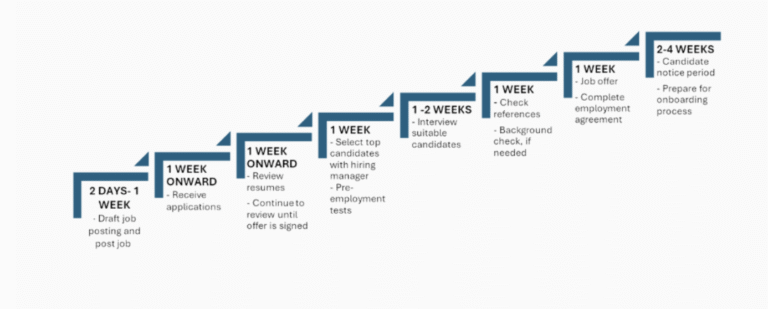
A clear job description will serve as an important pillar in the recruitment process; however, it is important to understand that effective recruitment is a strategic process that requires planning, coordination, and time. The figure below shows the potential timeline of a typical staff recruitment (between 8 -15 weeks).
Determining Adequate Compensation
As highlighted in Doctors of BC Human Resource Toolkit, it is important to clearly define the total compensation (annual salary plus any benefits you are including) for the role. Employers should be prepared for discussing the elements of compensation.
In determining a suitable compensation, it may be valuable to compare salary ranges for specific roles by:
- Speak with other clinics in the region to better understand their compensation ranges.
- Use public compensation data sources such as PayScale Canada, Indeed salaries, Glassdoor Canada, or other similar sources.
- Browsing job postings for similar roles at local health authority job board
- Consider how much other jobs in non-healthcare sector that candidates qualify for might compensate. For example, the average salary for baristas or entry level office assistants might help define your clinics minimum compensation.
Another factor, which may affect compensation is the employment payment structure. The most common employment structures for medical office staff are hourly and salary payments. With the latter providing more stability and security for the staff. The table below highlights some important characteristics of each payment structure.
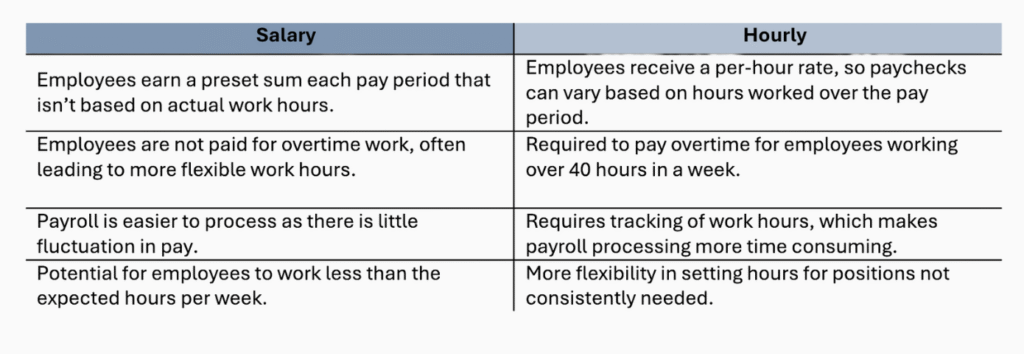
In addition to base salary, the clinic will bare the expense of statutory benefits as outlined in BC and federal employment standards. These include paid vacation, holidays and overtime, and Canada Pension Plan (CPP), Employment Insurance (EI) and Worker’s Compensation (WCB) premiums. As these are required by BC and/or federal employment standards, most employees will take them for granted. However, they do present a real cost to employers, which must be factored in when designing a compensation package.
Other benefits can also be included in the compensation package. Although most employers grant benefits only to full-time staff, those who work 32 hours or more per week, some clinics also offer benefits to part-time staff to increase the competitiveness of their offer. Benefits are becoming more influential for attracting prospective employees and retaining talent in addition to supporting ongoing employee wellbeing. Clinics considering benefits, can choose from a number of options, including:
- Traditional plans including extended health, dental, group life insurance and paramedical coverage can be offered with co-pay options to offset costs.
- Flexible benefits allow employers to manage their costs while offering health coverage based on their employee’s needs. Employers choose how many credits to provide, and employees select the coverage they need.
Drafting Job Posting
Drafting a clear, compelling job posting is the first, and often most critical, step in attracting the right candidates. Although there are different approaches to designing a job description, a job posting should include the following components:
- Full time/part time and on-site/Remote expectations
- Clinic location
- Clinic size (at least in general terms, based on number of providers and staff)
- Develop a clear summary of the important elements of job from the previously developed job description
- Expected skillset and education (if possible, separate must-haves from nice- to-haves)
- Share some details of the compensation and any additional perks that may be provided
- Clear explanation of the application process, and if appropriate contact information for further information.
Note: Although job postings should be clear, concise and informative, it should not contain language that could be interpreted as discriminatory (e.g., requiring “Canadian experience” is prohibited under BC law).
Posting The Job
A job posting is an invitation to join a team committed to quality care and operational excellence. It would be valuable to ensure the right candidates are informed of the opportunity by leveraging different channels:
- Post to more than one job board- Indeed, Glassdoor, WorkBC, Eluta, and LinkedIn are commonly used platforms.
- Connect with MOA programs- BCIT, Camosun College, Langara, Okanagan College, UFV, VCC, VIU, and WCC are some of the programs with regular MOA cohorts.
- Get in touch with settlement services agencies such as ISSofBC and MOSAIC.
- Create a referral incentive for existing employees.
- Display that you are hiring in the clinic and on the website practice.
- If time is of the essence, consult 2-3 recruitment agencies in your area.
Screening & Interviewing
- Select a hiring lead, usually the person the position will report to, who can review all applications received for the specific position until the position is filled
- Reject candidates that clearly do not meet the must-have job requirements
- Prioritize applications based on the most important criteria for the position
- Aim to contact 10%-20% of the totally applicant pool and expect some applicants not to reply back
- Once a number of suitable candidates have been identified, interviews can be scheduled.
- If possible, conduct interviews with a panel of 2-3 members, which may include senior MOAs, this helps correct for bias
- Screen candidates using questions that reflect the essential requirements of the job
- Ask the same interview questions to all candidates
- Write down notes or record all interviews so that candidates can be evaluated in a structured manner
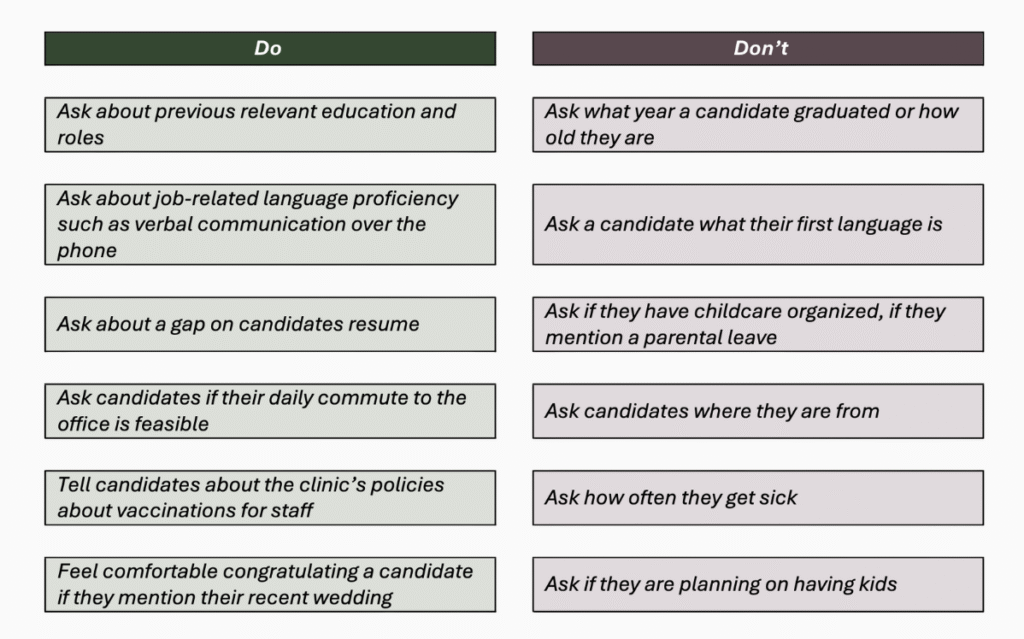
It is essential to be mindful of regulations and navigate the interview in a professional manner. The table below provides limited example of common scenarios that may arise.
Selecting Candidates
Hopefully, the candidate screening will identify several suitable candidates to select from. It is crucial to employ a structured approach for the selection process. To this end, the hiring Lead should work with others in the clinic to develop selection criteria for scoring candidates. This selection criteria must be a bona fide occupational requirement (BFOR) as per the BC Human Rights Code. The following questions may help guide the development to the selection criteria:
- Are the criteria specific, measurable, and job-related?
- Do any of the criterion exclude certain groups as prohibited under human rights legislation?
- What competencies would be an asset in the position, and which are more/less important?
- What skills, expertise, experience and qualifications are required to be successful in the position? How can these be quantified objectively to guide the selection efforts?
Following Up with Candidates
It is recommended that you follow up with and inform all candidates of their application status. For candidates in consideration, the communication will help ensure they will remain interested and may prevent them from accepting other roles without informing you. This practice helps maintain relationships with promising candidates that may be suitable for other roles in the future. The format of the communications may differ for different applicants:
- Applicants who did not meet the application requirements and were not interviewed, can be informed by email on a weekly basis.
- Applicants who participated in an interview, but were unsuccessful, should likely be informed by phone. However, you may hold off on informing them until your preferred applicant has signed and returned their employment offer letter. This way, if your preferred applicant does not accept your offer, you can extend an offer to your next viable candidate.
- For candidates in consideration, the communication will help ensure they will remain interested and may prevent them from accepting other roles without informing you. This is a good practice as an employer and helps maintain relations should you need to hire again for the same role. We recommend waiting to inform an unsuccessful applicant until the successful applicant has signed and returned their employment offer letter.
Extending an Employment Offer
Once a suitable candidate has been identified, the clinic needs to offer the position to the applicant in writing. The DoBC website shares an offer form that can be downloaded here.
It is common practice to verbally discuss the terms of employment, before sending an employment agreement, where the clinic representative reviews and confirms start date, salary, vacation, legal name and residential address of the employee.This conversation is followed up with an employment agreement that contains the following main components:
- Employee Information– The employee’s legal (and preferred) name in the opening and signature lines and residential address, where possible
- Terms and Conditions– Terms of Employment encompass areas such as Location & Hours of Work, length of the probationary period, Salary, Benefits, Vacation, Duties & Responsibilities, Governing Authority and End of Agreement (Termination)
- Job Description– A complete description of the roles and responsibilities for the position is usually included as an appendix or section under duties & responsibilities.
- Consideration– Both parties must provide something of value in order to create a binding agreement and have time to thoroughly review the terms of employment. Consideration also applies to material amendments of employment agreements.
An employment agreement must be signed by both parties before an employee starts working for the employer. It is crucial to have sign written contracts with all employees and providers (who are usually contractors).
Note: The information in this section, and other sections of this document, do not represent legal advice. They are provided for information purposes only. Clinics should seek legal counsel in developing a legally sound employee agreement.
Onboarding New Employees
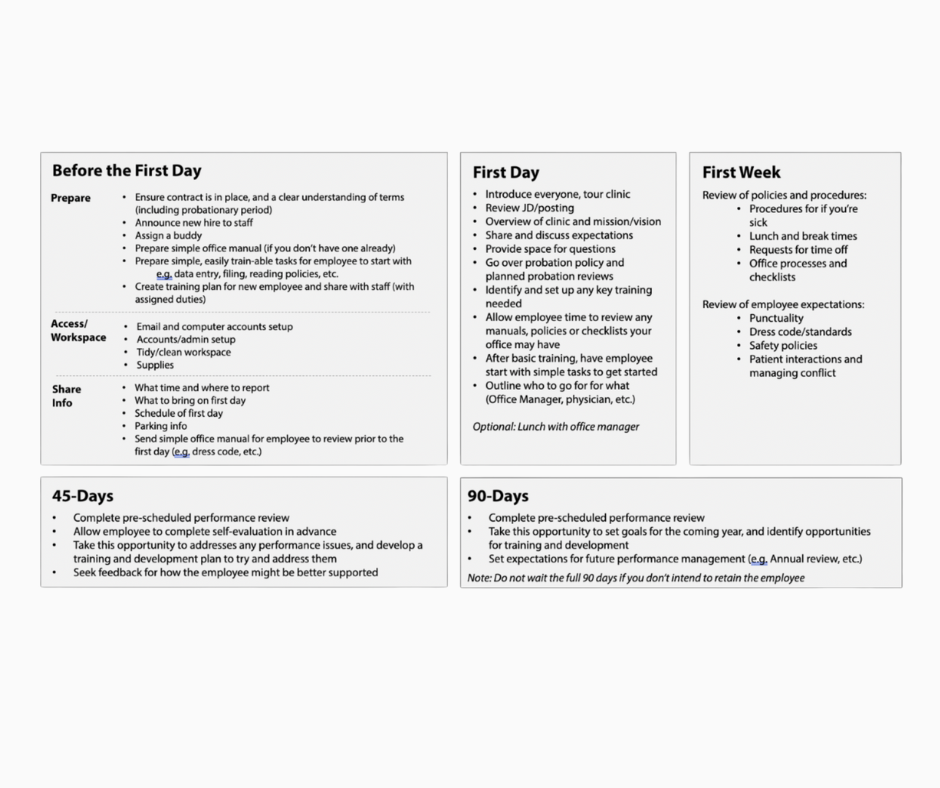
A well-structured onboarding process is more than a formality. It is the foundation for long-term success, engagement, and retention. Organized onboarding ensures that staff understand their roles, responsibilities, and the culture they’re joining. It reduces confusion, accelerates productivity, and fosters alignment with team values and workflows. More importantly, it signals to new hires that they are valued and supported from day one. It is therefore important for clinics to develop an onboarding plan or checklist. Two examples of what an onboarding plan/checklist may look like are provided below.
Prior to First Day
- Confirm IT and company device requirements.
- Arrange EMR Access.
- Meet with team to plan training schedule.
- Email new hire to confirm start time, who they will meet, and documents they should bring
First Day
- Provide practice tour and introduce new hire.
- Complete new hire paperwork.
- Review safety protocols.
- New hire meeting with direct supervisor.
- Provide practice policies and procedures.
- Meet to debrief at the end of day.
First 3 Months
- Confirm vacation and clinic schedule.
- Input new hire into payroll system.
- Invite new hire to previously scheduled meetings.
- Meet with new hire regularly and ask for feedback.
- Set performance expectations.
- Conduct probation
Probationary Period
Probationary periods provide the employer time to determine if the candidate is suitable for the position.
Important considerations relating to probation period:
- It is valuable to pre-schedule the 45-day and 90-day review for employee and manager. Please note that the 90-day review should take place before the actual 90-day mark.
- Employee should get advance notice of the review so that they can prepare for the meeting and to complete self-evaluations.
- Managers should schedule an internal deadline for a decision (whether to retain the employee) prior to the end of the 90-day period.
- Ensure regular communication with employee and their manager to identify any issues and correct any performance issues, where possible.
- Managers should aim address issues hampering employee performance during the probationary period. Proactively identifying and addressing issues will help prevent them from escalating. Addressing concerns or issues promptly, rather than waiting for a previously scheduled review, can help resolve conflict.
- Upon completion of a new employee’s probation period as outlined in their employment contract, conducting a probation period review will help acknowledge employee successes and identify areas for improvement. Alternatively, the clinic can part ways with employees who do not fit the clinic culture.
- As long as the parameter of the probationary period is clearly outlined in the employment agreement, the employer may terminate the employee without cause or any obligation for giving notice or severance payment during this time. However, employers must still ensure that termination during probation is not discriminatory or in violation of the BC Human Rights Code.
DoBC’s probation period performance review template may be helpful in guiding the probationary review. Other relevant information can be found on BC Business “Myths About Employee Probation Periods” and Jobs Canada “Managing Employees”
Performance Management Best Practices
Performance management is intended to reinforce strengths and address performance-related challenges or concerns. Annual performance reviews allow employees and management (or providers) to reflect on the past year, the demands of the job and current performance. Additionally, the review process examines the working relationship between coworkers as well as the employee and employer.
Setting Clear Expectations through HR Policies and Procedures
A well-defined set of employee policies is essential for fostering a respectful, safe, and productive workplace. These policies serve as a shared framework that guides behavior, clarifies expectations, and ensures consistency across all levels of the organization. Adherence to these policies represent an important element of performance management and evaluation.
This section briefly introduces the common HR policies and procedures used in medical clinics.
- Scheduling & Attendance Policy and Procedures– generally outlines expectations around work schedules and punctuality, as well as the procedures for informing management and colleagues of unanticipated/emergency late arrival or absences. It ensures that staffing levels are maintained to support patient care, and provides clear procedures for managing shift changes, and addressing attendance concerns.
- Respectful Workplace Policy– defines the standards for maintaining a safe, inclusive, and respectful work environment. It addresses harassment, discrimination, and bullying, and outlines procedures for reporting and resolving workplace conflicts in a confidential and supportive manner.
- Code of Conduct Policy– sets expectations for professional behavior, ethics, and accountability. It guides employees in maintaining integrity, confidentiality, and respectful interactions with patients, colleagues, and external partners.
- Hours of Work & Overtime Policy– specifies regular working hours, break entitlements, and rules governing overtime. It ensures compliance with employment standards and provides clarity on how additional hours are approved, tracked, and compensated.
- Vacation & Leave Policy- generally describes entitlements and procedures for requesting vacation, sick leave, personal days, and other types of approved time off. It ensures that leave is managed fairly and consistently while supporting employee well-being and operational continuity.
- Health & Safety Policy– provides guidelines to maintain a safe and compliant workplace. It includes protocols for incident reporting, emergency procedures, infection control, and employee responsibilities in promoting a culture of safety.
- Technology and Equipment Policy and Procedures– outlines the proper use and care of clinic-devices and systems. Employees are expected to use technology responsibly, with patient privacy and safety in mind, and report issues promptly to ensure secure and efficient operations.
- Information Privacy Policy– outlines the responsibilities of all staff in protecting patient and organizational data. It ensures compliance with privacy laws and sets clear guidelines for handling, storing, and sharing personal health information securely and ethically.
- Compensation & Raises Policy– usually explains how employee wages are determined, including pay structures, review cycles, and eligibility for raises. It promotes transparency and fairness in compensation practices while aligning salary progression with performance and clinic budget considerations.
- Performance Management Policy and Procedures– outlines the procedure and the timing by which the employee performance is evaluated, supported, and if needed managed. It includes goal setting, feedback mechanisms, and potential disciplinary routes.
Performance Reviews Guidelines and Best Practices
Performance reviews are structured evaluations of an employee’s/staff’s work over a specific period, designed to assess how well they meet the expectations of their role. They provide opportunities for employees and managers to reflect on achievements, identify areas for improvement, and set clear goals for future development When designed thoughtfully and implemented in regular cadence, performance reviews are a vital tool for fostering growth, accountability, and alignment within the workplace.
This section discusses regular performance reviews that are conducted for all employees. A pdf of this section can be found here
Objectives of Performance Reviews
- To measure and evaluate an employee’s job-related aptitude, behaviors, and results.
- To provide honest feedback and assessment of the employee’s performance that affords the employee the opportunity for improvement and the practice the opportunity to recognize employee contributions.
- To ensure the employee and the practice are clearly aware of the objectives, expectations, performance measures and results.
- To establish employee goals that support professional growth as well as practice goals.
- To ensure that goals are realistic and attainable.
- To determine if any resources, training or development is required.
Best Practices for Providing Feedback
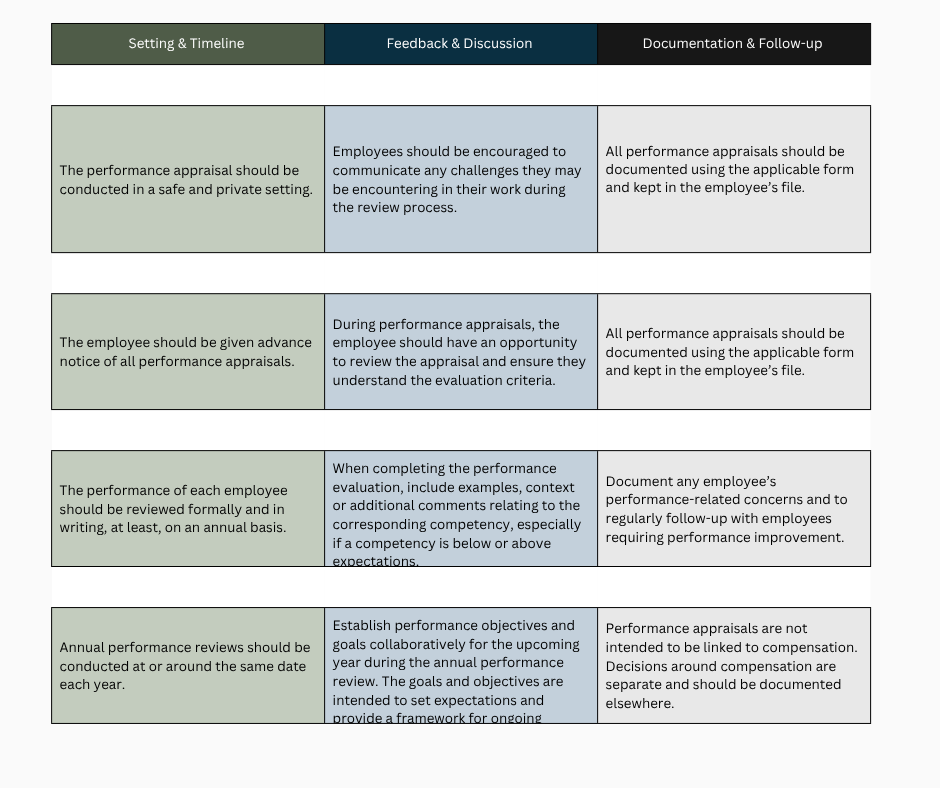
- It is crucial that all performance reviews are structured and documented. The documentation of performance reviews is of particular importance if escalation in performance management is deemed necessary.
- Performance appraisals should be a balanced, honest, and fair review of the employee’s performance that focuses on the work, not the person.
- The employee’s strengths should always be acknowledged and good performance reinforced.
- Areas of improvement should be discussed while specifically citing examples where possible.
- Regular check-ins during the conversation with the employee while discussing areas of improvement may be needed to avoid miscommunication.
- It is advisable to collaborate with the employee to develop an action plan for areas of improvement.
- Consider breaking–down improvement targets into smaller steps over time, when possible.
- Ensure the employee is able to provide feedback to the employer as well.
- Some clinics develop performance review templates that can be shared with the employee ahead of the meeting to provide them with an opportunity to better prepare for the meeting.
- If an employee has a conflict or concern with the review, this should be documented and attached to the performance review.
- Although many clinics connect performance reviews with raises, it may be better practice to separate the two conversations to prevent employees from becoming defensive or see the process as a justification for compensation. For example, clinics could provide cost of living increases on a pre-determined schedule and focus on performance reviews as an opportunity to discuss performance without any confounding factors.
Doctors of BC provides downloadable templates for supervisors (Performance review: Supervisor assessment template) and employees (Self-assessment template) as a guide, encourage both parties to reflect on the discussion items prior to the meeting and to ensure employers and employees are working toward a common goal. Another slightly simpler template can also be accessed here.
General Guidelines for Performance Reviews
Structured Approach for Performance Improvement
Outlining the Issues with Clear and Respectful Communication
In time, either through the course of a regular performance review or during daily interactions, employers may become aware of potential issues with performance that may need to be addressed. Whether the issue is due to interpersonal relationships or the tasks related to job duties, as the employer, it is important to have a structured approach.
The first step to performance improvement is for the employee’s direct manager to outline the issue for the employee in a clear, and respectful manner. The aim of this conversation is to first understand the context and ensure all situational perspectives are understood. If necessary, the manager should highlight why a change is needed and why the matter has been escalated.
A few best practices to keep in mind for these interactions include:
- Keep the conversation professional and private
- The employee’s direct manager should be empowered to communicate with the employee directly. If escalation is needed, others may be invited to the conversation.
- Whenever possible, the content of the discussion should be kept confidential.
- Maintain consistency across all staff to avoid perceptions of favoritism.
- Align discussions and actions with organizational values. Corrective actions should aim to achieve excellence and safety. Reinforce that actions taken (or discipline) is not personal or punishment; it’s a pathway to improvement.
- Documentation should include the date, the parties present, and the key points of the conversation. The notes should reflect the perspectives of all parties involved include next steps and agreed outcomes. (if possible, have someone take notes during the debrief)
- Ensure the employee clearly understand how the situation has deviated from expectations
- The employee’s direct manager should advise the employee of any unacceptable conduct and/or performance, with specific examples where possible, and give the employee the opportunity to explain their actions before any further action is taken.
- Refer to the previously developed job descriptions
- Highlight the expected behavior by leveraging the clinic’s HR policies
- Foster timely and open communication
- All performance issues should be discussed in a timely manner. Either during the performance review or shortly after a misconduct has occurred.
- The employee’s direct manager should advise the employee of any unacceptable conduct and/or performance, with specific examples where possible, and give the employee the opportunity to explain their actions before any further action is taken.
- Celebrate progress when employees meet goals or turns performance around.
- Document all interactions and safeguard them appropriately
- Documentation should include the date, the parties present, and the key points of the conversation. The notes should reflect the perspectives of all parties involved and include next steps and agreed outcomes. (if possible, have someone take notes during the debrief)
- Keep detailed records of feedback, incidents, and actions taken. Use standardized forms or digital systems to ensure accuracy and compliance. This protects both the organization and the employee in case of disputes.
- Ensure all letters or documents related to the disciplinary process are included in the employee’s personnel file.
- Ensure all disciplinary conversations are objectively documented.
Managing Relationships and Dealing with Conflicts
Strong workplace relationships are the foundation of collaboration, especially in healthcare environments where teamwork and communication directly impact patient outcomes. Yet, even in the most cohesive teams, differences in perspective, communication styles, and expectations can lead to strained relationships and conflicts. Experienced managers recognize that conflict is a natural part of working life and, when managed effectively, can lead to growth, innovation, and stronger interpersonal dynamics.
In a positive work environment, the groundwork for dealing with these issues are set through HR policies and procedures. When issues arise, they should be addressed constructively and professionally through:
- Respectful dialogue, where both parties have psychological safety to express their points of view and perspectives.
- Early intervention, before an individual incident affecting one or two team members/clients can escalate.
- Clear resolution pathways or a performance improvement plan, that both parties discuss and is documented by the manager to guide further interactions and serve as basis of future actions, if needed.
The following resources maybe helpful as you navigate these conversations:
- Dealing with conflict resource page from Canadian Medical Protective Association’s (CMPA)
- Government of BC’s managing relationships with employees page
- Government of BC’s Managing problems with employees page
Exercising a Progressive Approach to Performance Improvement
When performance or conduct concerns arise, it is important to address them through a fair and consistent process that encourages growth while safeguarding the integrity of the team and the quality of service.
A successful performance improvement strategy should aim to balance accountability with support. For many workplaces, this strategy employes a tiered feedback and escalation process that includes:
- Verbal Warning– used for minor unacceptable conduct and/or performance. Some clinics, approach this a coaching or verbal feedback rather than a warning. In either case, the process should remain the same.
- Managers will discuss the unacceptable conduct and/or performance with the employee, so that they understand the expected standards of performance, reason for warning, any remedial action they are required to take as a result of their actions, and consequences if unacceptable conduct and/or performance continues.
- Objectively document the discussion that occurred and place the notes in the employee’s personnel file.
- Follow-up any verbal warning with an email to record what was discussed and the need for a change in behavior. The email chain can be used to document the discussion and save in the employee’s file.
- Written Warning– used for repeat of minor unacceptable conduct and/or performance after verbal warning, or for conduct and/or performance which is more serious in nature.
- Complete a written letter outlining the details of the infraction. Describe the unacceptable conduct and/or performance to ensure the employee understands the expected standards of performance, reason for warning, any remedial action they are required to take as a result of their actions, and consequences if unacceptable conduct and/or performance continues.
- Review the content of the written warning letter with the employee in a meeting
- Objectively document the discussion that occurred and save the notes, along with a copy of the written warning, in the employee’s personnel file.
- Consider having a neutral third-party present at the meeting when presenting an employee with any kind of disciplinary action.
- In some cases, written warning can escalate to a performance improvement plan immediately. If so, workplaces will create a Performance Improvement Plan for the employee to accompany the written letter.
- Doctors of BC’s written warning template may be helpful for those looking to develop a template for their organization.
- Performance Improvement Plans (PIP)– used as a follow up to a written warning (especially for misconduct) or because of discussion during a regular performance review. A PIP is a collaborative effort between management and the employee to restore performance, build confidence, and maintain high standards of care. It would be more constructive if PIP is not seen as a punishment, but a second chance with structure.
The main components of a Performance Improvement Plan are:
- Clear Identification of Issues – usually completed during a performance review or as a follow-up to a written warning. The PIP outlines specific areas where performance is not meeting expectations, whether related to job duties, communication, punctuality, or professional conduct.
- SMART Goals– objectives are designed to be specific, measurable, achievable, relevant, and time-bound. This gives the employee a clear roadmap for improvement.
- Support & Resources– depending on the area of improvement, the plan may include mentorship, training, or tools to help the employee succeed. For example, a colleague may be identified to support the employee with EMR.
- Timeline and Checkpoints– A defined period (e.g., 30 or 60 days) is set for improvement, with regular check-ins to assess progress and adjust support as needed.
- Outcome Criteria – The PIP plan specifies what successful improvement looks like and what actions may follow if goals aren’t met, such as reassignment, further coaching, or disciplinary steps.
Doctors of BC’s PIP, which is based on their performance review template, and may serve as a good starting point for those looking to develop a template for their office. Others may choose to leverage the templates shared in the performance review section.
4. Suspension- used if performance continues to lag or after repeated warnings. In rare circumstances, suspension may be used during an investigation following/along with a written warning, especially if the investigation involves a sensitive matter (e.g., an allegation of sexual harassment).
- The employee must be notified of the reason for the suspension and its expected duration.
- Suspension and all relevant communication and context must be objectively documented, and a copy of the notice must be included in the employee’s personnel file.
- Suspension may be a period of paid or unpaid leave. Suspensions during investigations will be paid except in rare circumstances.
- Clinics may want to consult a human resources professional before proceeding with a possible suspension.
- It is also important for clinics to seek legal advice if considering paid or unpaid suspensions and, in particular, if an investigation process is required.
- Any future actions including terminations (if necessary) must be carried out in accordance with the BC Employment Standards Act.
5. Termination– used as last resort and sparingly.
- If all other efforts in managing the employee’s performance is unsuccessful, the clinic may decide to end their employment. There are a number of factors to keep in mind when terminating an employee for cause or other reasons. See the termination section of this document for further information.
Ending Employment
Ending an employment relationship, whether through resignation, retirement, or termination, requires thoughtful planning, legal compliance, and respectful communication. In British Columbia, employment termination is governed by the BC Employment Standards Act, and clinics must ensure that all administrative and operational steps are followed to protect both the organization and the employee.
This section outlines the key considerations, tools, and procedures for managing the end of employment, with a focus on fairness, transparency, and continuity of care.
Note: the information provided here does not constitute legal advice, it is important for clinics and employers to seek professional and qualified legal advice to inform their decisions.
Determining Reasons for Ending Employment
Employers and employees may part ways for a number of reasons, which impact the amount of notice that may be provided. Some of the more common reasons include:
- Resignation or Retirement
- Employees must submit a formal Resignation and Retirement Confirmation Letter.
- The Employments Standards Act does not specify how much notice an employee must give an employer, however common law requires employees to give reasonable notice
- Reasonable notice should be outlined in the employment contract.
- Constructive Dismissal occurs when an employee resigns due to changes made or requested by their employer which are not possible or would result in a fundamental change to their employment; and when an employer creates or allows a hostile or toxic work environment.
- Termination Without Cause, including due to lack of funding
- Common reasons include restructuring, cost-cutting, or performance concerns.
- The Employment Standards Act outlines the required working notice or pay in lieu of notice (or combination of both) that Employers must provide their employees. Note: common law may be more, thus clinics should seek legal advice
- Notice period must also align with other contractual terms.
- Wrongful Dismissal occurs when an employer fails to provide reasonable notice or pay in lieu of notice when terminating an employee without just cause.
- Termination With Cause
- Compensation for length of service is not required when terminating employees with just cause and certain limited exceptions; however, the onus of proof is on the employer to show on a balance of probabilities that an employee:
- breached the employment agreement in a fundamental way. OR
- has committed misconduct that has irreparably damaged the employment relationship.
- If burden of proof is met, no notice period is required.
- Applies when serious misconduct occurs (e.g., theft, harassment, safety violations).
- It is strongly recommended that Employers should consult a legal or HR professional before proceeding.
- Termination during Probationary period
- Occurs within the first 90 days of employment, if the employee is not deemed to be a fit.
- No notice or compensation is required, as long as the parameter of the probationary period is clearly outlined in the employment agreement.
- Employers must ensure that termination during probation is not discriminatory or in violation of BC Human Rights Code.
Did you know: “Wrongful Dismissal” occurs when an employer fails to provide reasonable notice or pay in lieu of notice when terminating an employee without just cause. Wrongful dismissal claims may be initiated if employer did not have sufficient cause to terminate an employee without notice.
Initiating the Termination Process
Preparations before meeting the employee
Terminating employees can be confrontational and emotionally taxing. It may be valuable to prepare before approaching the employee.
- Familiarize yourself with the administrative and operational requirements when terminating an employee.
- Consult a legal advisor or HR professional
- If no notice period will be provided, ensure important knowledge held by the employee is transferred to others in the clinic. if possible, review important documents with your employee to prepare for transition.
- If there will be a working notice period, ensure to document the information that should be transferred so that you can develop a plan with the employee to support the transfer during the meeting.
- Prepare documentation needed. DoBC’s Ending employment checklist and Internal ending employment checklist can help guide this process.
- Learn more about how to provide a Record of Employment (ROE) and make sure to prepare one within 7 days of termination.
- Be prepared to answer questions about final wages (more information below).
Conducting a Termination Meeting with the Employee
- Conduct the meeting in a neutral, confidential location with at least one other person present.
- If possible, schedule the meeting during early morning or late afternoon, when fewer colleagues may be present
- Remain respectful and on message
- Document the interaction. If another person is attending the meeting, ask them to take objective notes.
- When appropriate, provide information about the process (timing of last payment, notice period, last day, etc.)
After the meeting
- Make notes of your discussion for future reference
- Meet with remaining staff to address non-confidential questions
- Ensure all final paperwork is submitted to HR and provided to the employee in a timely manner
- After the employee’s last cay, change password and keys, if needed.
Notification Requirements
No notice is required if the employee:
- Voluntarily resigned
- Is in their probationary period
- Is retiring
- Was dismissed for just cause
- Was on a fixed-term contract that has expired
- Worked casually on temporary assignments
In all other cases, employers must provide written notice and/or compensation based on length of service. Always consult legal or HR professionals to ensure compliance.
Working Notice– May be appropriate when the position has a defined end date and expectations are clear. Not recommended when the termination is unexpected or may negatively impact the workplace.
Paying Final Wages
Final wages include, but are not limited to overtime, remaining hours in an employee’s time bank, length of service compensation, vacation pay owed, outstanding expense reimbursements, and earned wages in final pay period.
- If the employer terminates employment, then the employer must remit payment to the employee within 48 hours of their termination.
- If the employee terminates employment, the employer must remit final payment with 6 calendar days of the employee’s last day.
- If an employer cannot locate the employee, employers should remit payment to the Director of Employment Standards within 60 days.
- Employers must prepare a record of employment (ROE) within 7 calendar days of the termination (interruption of employment). ROE web allows employers to submit the relevant employment history directly to Service Canada.
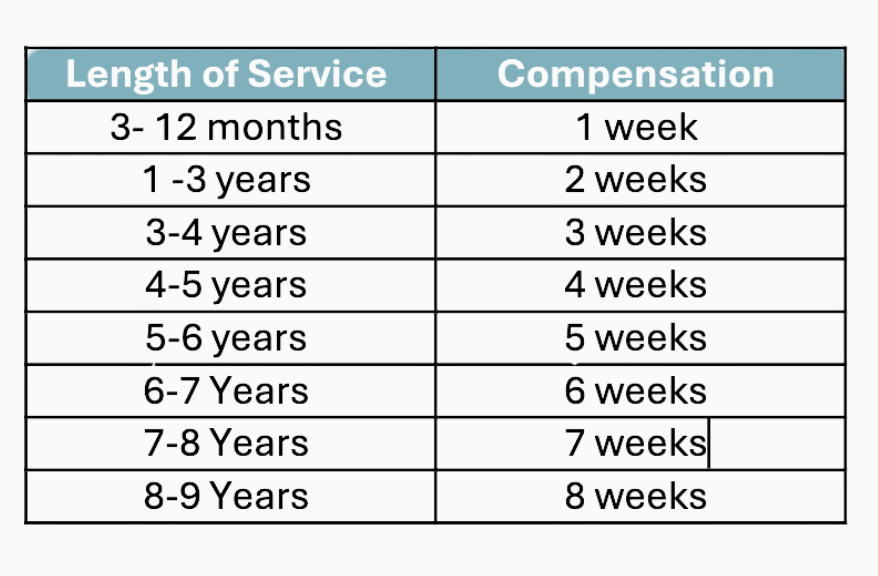
The table below outlines the general length of service compensation required. Based on the contract and other factors, the amount may be different. It is strongly recommended to get specific legal advice for each situation.
Prior to Employees Last Day
It may be difficult to connect with your employee after their last day. Here are a few elements to complete prior to their departure:
- Ensure a successful knowledge transfer
- Request a Transition Document from the employee outlining key responsibilities and information.
- Review the document together to clarify any outstanding items.
- Conducting Exit Interviews– exit interviews provide valuable insights into workplace culture, leadership, and areas for improvement. Key objectives include:
- Identifying HR-related issues
- Understanding employee perceptions
- Evaluating leadership effectiveness
- Identify themes and follow up on significant concerns to strengthen the work environment.
You can offer an exit interview in person, by phone, via email, or through an online survey. If the interview is in person or via phone, use a neutral interviewer to encourage honest responses.
Retention Framework
Recruitment may help fill positions, but retention sustains performance. High staff turnover, especially if unplanned, may disrupt patient care, contribute to provider burnout, strains resources, and erodes morale. Conversely, retaining skilled and engaged staff fosters stability, strengthens institutional knowledge, and enhances the overall quality of service.
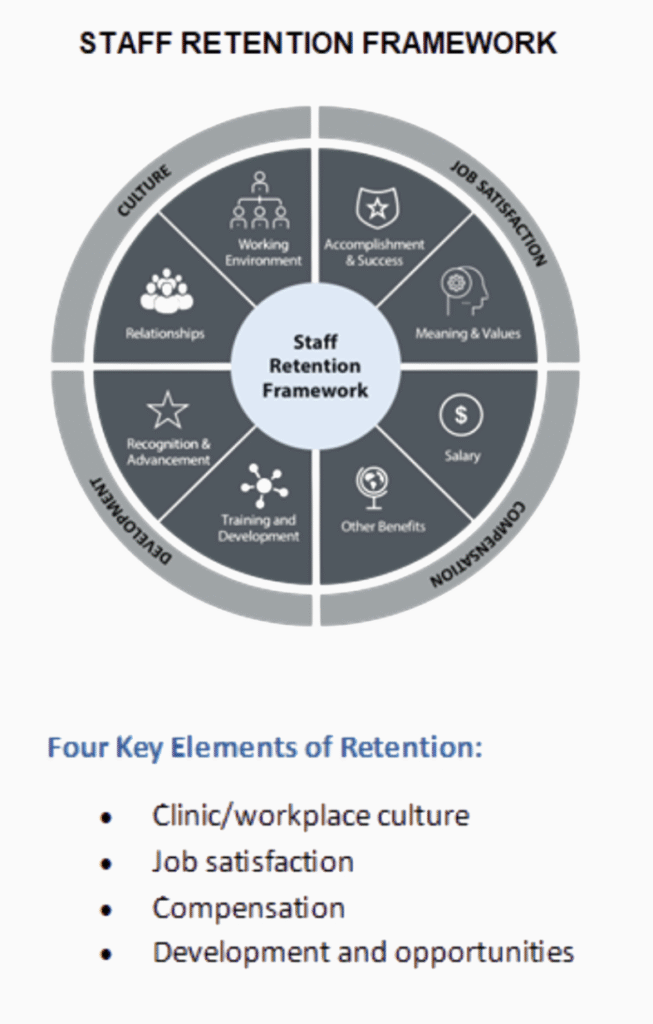
A retention framework provides a proactive approach to understanding employee needs, supporting professional growth, and cultivating a workplace culture where people feel valued and invested. It aligns incentives, feedback mechanisms, and development opportunities with long-term organizational goals.
In healthcare settings, drivers of retention for administrative and managerial clinic staff include culture, job satisfaction, compensation, as well as learning and development. the following retention framework outline some of the different ways Employers might approach retention in medical clinics.
Clinic/Workplace Culture
Establishing and improving clinic culture can be challenging. Medical clinics are fast-paced environments with a significant administrative burden on Medical Office Assistants and Office Managers. Especially in today’s environment with a shortage of good staff, clinic culture can be an especially important driver of retention. It may be valuable for employers to reflect on the following:
- Do your employees like coming to work?
- Do they get along with each other and with the physicians and medical staff?
- Are roles and responsibilities clear?
- Do staff have meaningful relationships at work?
Job satisfaction
To remain engaged in a role, employees need to feel satisfied with the work they are doing. They must feel a sense of connection to the overall mission of their workplace. Their task assignment should also aim to balance their skillset with engaging and challenging tasks so that staff can achieve a sense of accomplishment with the assigned tasks and responsibilities. Employees weighing their job satisfaction might ask themselves the following questions:
- Am I making a difference in my role?
- Do I really understand my clinic’s mission and core values?
- Do my personal values align with my clinic?
- Do I feel fulfilled with the work I’m doing?
- Are my contributions valued?
Compensation
Financial reward comprising base salary, bonuses, benefits, etc. can be a very important factor for employee retention. As long as an employee is within a certain acceptable range compared to their other alternatives, compensation may be an element that helps keep the role at par to other alternative opportunities that staff could consider. Staff may be internally addressing questions such as:
- Am I able to make a living wage at this job?
- Is my compensation competitive in the current job environment?
- Are my increased responsibilities appropriately rewarded from a financial point of view?
The current job market is attractive for administrative staff and challenging for clinics and employers. This means staff have several other local alternatives with varying levels of responsibilities compared to their current workplace. While all drivers of retention are important to consider, compensation is the most quantitative, which makes it easier to compare among the competition. It is also important to highlight that the total compensation is different from wages.
A compensation package could include:
- Hourly wage or Salary
- Bonuses (Merit based, Christmas, birthday, etc.)
- Paid time–off (Vacation days, sick days, and holidays)
- Extended health benefits (paramedical, dental, disability, and/or life)
- Tuition assistance
- RSSP matching
- Employee assistance programs
- Perks at work (periodical paid lunches/snacks, free coffee/tea, free parking, etc.)
- Paid courses and development opportunities
It is important to note that in many cases, compensation is not the leading driver for turnover, but one of the contributing factors, as outlined in this 2022 McKinsey & Company Report.
Opportunity for learning/development
Many employees are looking to advance their careers. Learning and development opportunities can be valuable retention tools. Clinics should proactively discuss employee goals and provide professional development opportunities for employees to help them improve performance, take on new responsibilities, and develop in their careers. Managers and clinics should think about how their staff might respond to the following questions:
- Have I received appropriate onboarding and training during my tenure?
- How often am I learning new skills in this role? Do I see a path to an elevated role in the future?
- Does my clinic support my training and development? Are there opportunities for continued learning?
Improving Retention
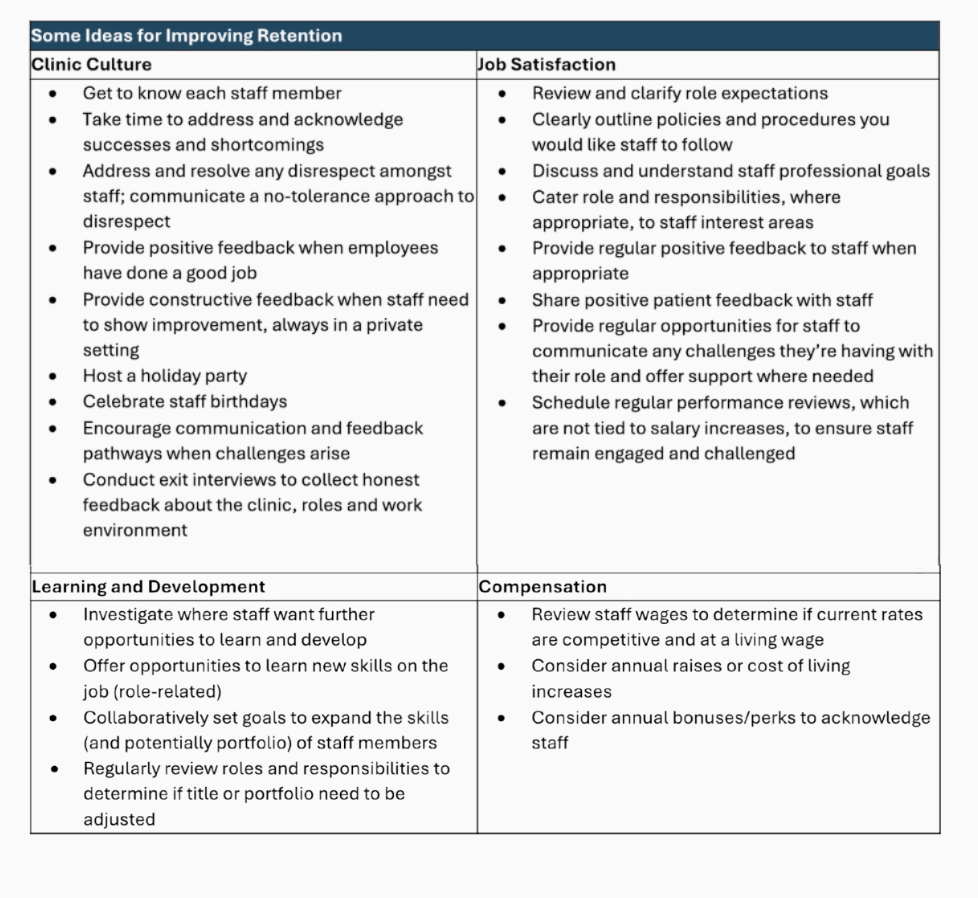
In a sector where burnout and staffing shortages are real threats, retention should not be a passive outcome but a strategic priority. The following table leverages the framework outline above to summarize some ideas for improving retention efforts.
Employment Regulations
Employment regulations in BC are designed to uphold safe, fair, and legally compliant workplaces. These regulations reflect provincial labour standards, privacy laws, occupational health and safety requirements, and professional conduct expectations specific to clinical environments.
This section provides a framework for understanding the rights and responsibilities of both employers and employees within medical clinics and healthcare organizations. It covers key areas such as important regulations and guidelines and highlights important elements related to working hours and minimum payments, holidays and vacations, leave entitlements, workplace safety, and inclusive and accessible workplace (diversity, equity, inclusion, and accessibility).
Applicable Acts, Codes, and Guidelines
To ensure compliance with provincial legislation and uphold best practices in healthcare employment, it is essential to understand the legal and regulatory frameworks that govern workplace standards in British Columbia. This section provides direct access to some of the most applicable regulatory references in BC:
- The Employment Standards Branch manages the BC Employment Standards Act and Regulation. Anyone can contact the BC Employment Standards Branch by calling 1-833-236-3700 or sending a text to 604-660-2421.
- the BC Labour Relations Code governs the employment relationship between employers and employees represented by a union.
- The BC Human Rights Code lays out the basic rights of every individual in British Columbia which protect against discrimination and certain types of harassment in employment
- In BC, workplace health & safety is codified in the Workers Compensation Act and governed under Occupational Health and Safety Regulation and Workers Compensation Act Regulations enforced by WorkSafeBC.
Note: This document and its contents are provided for information purposes only and does not constitute legal advice. If issues arise or if you have specific questions, it is important to connect with employment lawyers and HR professionals. Common Law, also known as case law or precedent, is law that has developed over time through judges’ rulings. While civil (or written) law relies on a set of regulations and standards such as the BC Employment Standards Act, common law requires an in-depth knowledge of the applicable presidents and how to apply them, which is where employment lawyers and HR professionals can help.
Hours of Work and Minimum Payments
Understanding and complying with employment standards related to hours of work and minimum compensation is essential to maintaining a fair, lawful, and respectful workplace. In British Columbia, these regulations are governed by the BC Employment Standards Act, which outlines the minimum requirements for scheduling, breaks, overtime, and wage entitlements.
Limited highlights that may be relevant to clinics are provided below.
Hours of work
- Standard work hours are 40 hours in a week and 8 hours in a day with the standard week beginning Sunday and ending Saturday
- Employees must have, at minimum, 32 consecutive hours free from work each week and at least 8 hours between shifts.
- It is mandatory to schedule employees for at least 2 hours per day and provide the minimum daily pay if they report to work.
- Employers must provide one 30-minute unpaid break for every 5 hours of consecutive work.
Employee Compensation
- Employees must be paid at least minimum wage, as outline by government of BC, for all hours worked no less than twice per month.
- Pay periods cannot exceed 16 days.
- All earned and owed wages must be paid in $CAD within 8 calendar days.
- All overtime hours worked must be paid (or banked) at overtime rates.
- Banked hours must be mutually agreed upon, but employees should make the request to bank overtime hours.
Note: this is a non-exhaustive sampling and provided for information purposes only. Employers should review the regulations and connect with HR or legal advisors for guidance.
Holidays and Vacations
Paid holidays and vacation leave are essential components of a fair and balanced employment relationship. Time away from work, whether for rest, personal needs, or statutory observances, is not only beneficial to staff and the organization, but also an employee’s right. In British Columbia, these entitlements are governed by the BC Employment Standards Act, which outlines the minimum requirements for statutory holidays, vacation accrual, and compensation.
Limited highlights that may be relevant to clinics are shared below.
Employee entitlements related to vacations
- Employees are entitled to 2 weeks (4% total wages) of paid vacation time upon completion of their first year of employment
- After 5 years of service with the same employer, employees are entitled to 3 weeks (6% total wages) of paid vacation time
- Employers must allow employees to take vacation in periods of one week or more.
Employee entitlements related to statutory holidays
- A list of statutory holidays that are recognized in BC can be accessed here. Currently, the following eleven days are recognized as statutory holidays in BC:
- New Year’s Day
- Family Day
- Good Friday
- Victoria Day
- Canada Day
- B.C. Day
- Labor Day
- National Day for Truth and Reconciliation
- Thanksgiving Day
- Remembrance Day
- Christmas Day
- Employers must pay an average day’s pay to all eligible employees scheduled to work on statutory holidays. Eligible employees are:
- Those who have been employees for 30 calendar days; and
- Those who have earned wages on 15 of the 30 calendar days prior to the stat
- An average day’s pay is calculated by dividing the amount paid in the 30 calendar days before the leave by the number of days paid during that 30-day period
Note: these highlights are provided for information purposes only. Employers should review the regulations and connect with HR or legal advisors for guidance.
Leaves of Absence Entitlements
Employees in British Columbia are entitled to various types of leave under provincial legislation, designed to support their health, family responsibilities, and personal circumstances. Under the Employment Standards Act, employers cannot prevent employees from accessing their entitled leaves. it is essential to manage leave requests with clarity, fairness, and legal compliance.
Some examples or the common types of Leaves are shown below.
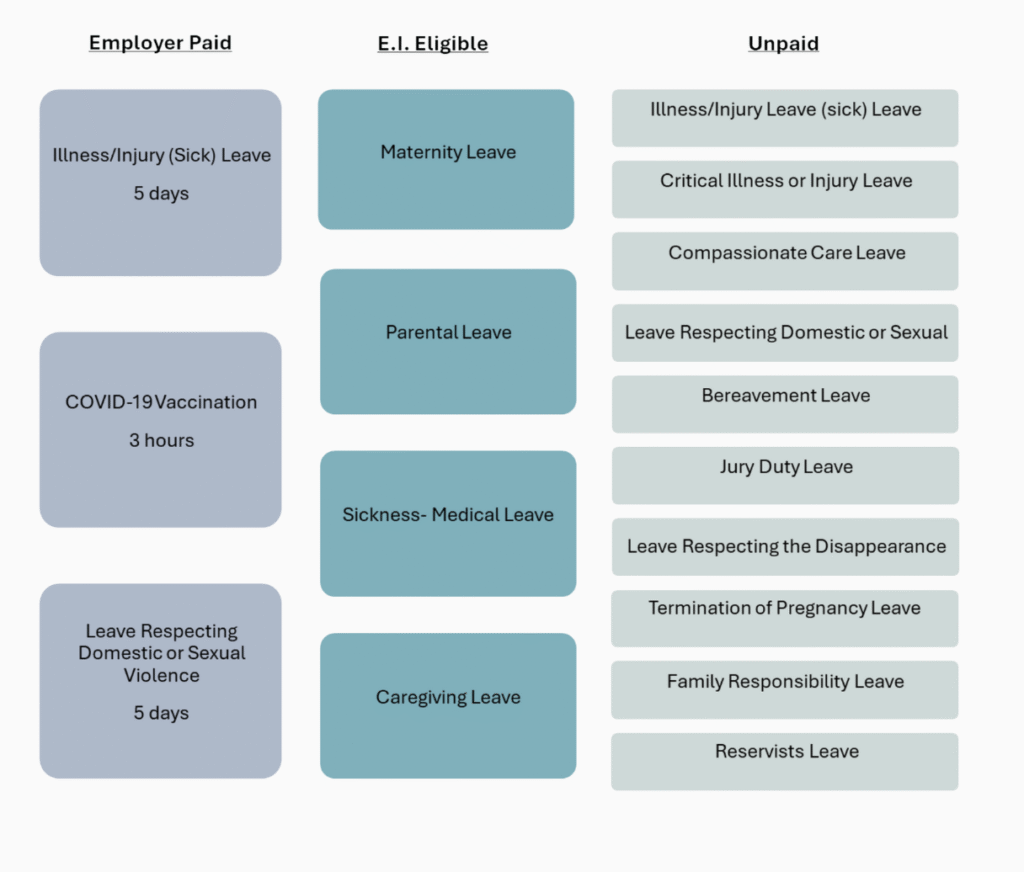
When a Leave of Absence is requested, employers may request reasonably sufficient proof that an employee is entitled to the requested leave. What is deemed reasonable may be situation dependent. Details such as the cost of proof, if proof is available, and the length of absence are considered. In some instances, a reasonable proof may be a medical bracelet or a receipt from a pharmacy if the leave is short. In other situations, the leave needs to be formally requested and documented.
Note: Employees on leave are still considered employed and remain eligible for vacation, wage increases, and benefits.
The following templates, developed by Doctors of BC, can help guide clinics as they manage employee leaves of absence:
Workplace Safety
Workplace safety is a legal and ethical responsibility, and in British Columbia, it is governed by the Occupational Health and Safety Regulation and the Workers Compensation Act, as administered by WorkSafeBC. In healthcare settings, where staff face unique risks—from infectious disease exposure to ergonomic strain—compliance with these regulations is essential to protecting both employees and patients.
WorkSafeBC requires all employers to ensure a healthy and safe workplace for their employees. The Doctors of BC’s Occupational Health and Safety info sheet will help employer in outpatient healthcare settings to better understand their responsibilities.
This Workplace inspection checklist can also guide employers as they review their protocols and workplace set-up.
For those exploring how to develop policies, the resources below maybe a good starting place:
- Small Business Guide for Bullying & Harassment
- Developing a Policy Statement
- Developing a Reporting Procedure
- Developing an Investigation Procedure
For those looking to improve on existing policies or looking for more information, WorkSafe BC has developed some useful tools and resources that may be of interest to prospective clinic owners and employers:
- Tools for identifying hazards and risks that may exist in your workplace
- A Bullying & Harassment Resource Toolkit
- Update communicable disease plans using this Communicable Disease Prevention Plan Guide
Additionally, the following templates, developed by DoBC, can also help guide clinics as they establish their workplace safety policies and reporting protocols:
Equity, Diversity, Inclusion, and Accessibility
As an organization you have a legal duty to take reasonable steps, in policies or conditions of work, to accommodate an employee’s or prospective employee’s individual needs. This applies to all protected grounds under the BC Human Rights Code, including discrimination in accommodation, service, and facility.
- In Communication with Staff and Colleagues – Avoid gendered communication, use neutral pronouns and if you are comfortable share your pronouns. Instead use inclusive language that demonstrate awareness of origins, is person-centred and non-preferential.
- In the clinic’s respectful workplace policy– consider developing a statement to that represents the organizations desired values and commitment to equity, diversity, inclusion and accessibility. This can also be included in some of the Organization’s collaterals.
- In the Clinic’s duty to accommodate policy– emphasize that clinic representatives in charge of staff management have a duty to inquire if an employee may need accommodation (e.g., disability, religious observance). Employers must not wait for a formal request.
More information about creating a culturally sensitive, respectful, and safe workplace, can be found in the government of BCs Words Matter: Guide on using inclusive language in the workplace.
Click here for section B: Provider Recruitment